
Chimney Flashing Repair in Melissa, TX
Most chimney leaks start in the metal at the joint, and most of them stay a repair. Tell our roofers what you're seeing and they read it before anybody climbs.
Chimney leaks that start in the metal
The first cold snap is when most people look up at the chimney, and a rust-colored streak down the brick is what turns up. You don't have to work out whether that's a roof leak or just old brick before you ask.
It looks like a caulk job, and it usually isn't. The metal is what fails: step pieces laced in with the shingle courses, counter flashing set over them. Ask Melissa Roofing Co, and our roofers measure the joint and walk you through it before you decide a thing.
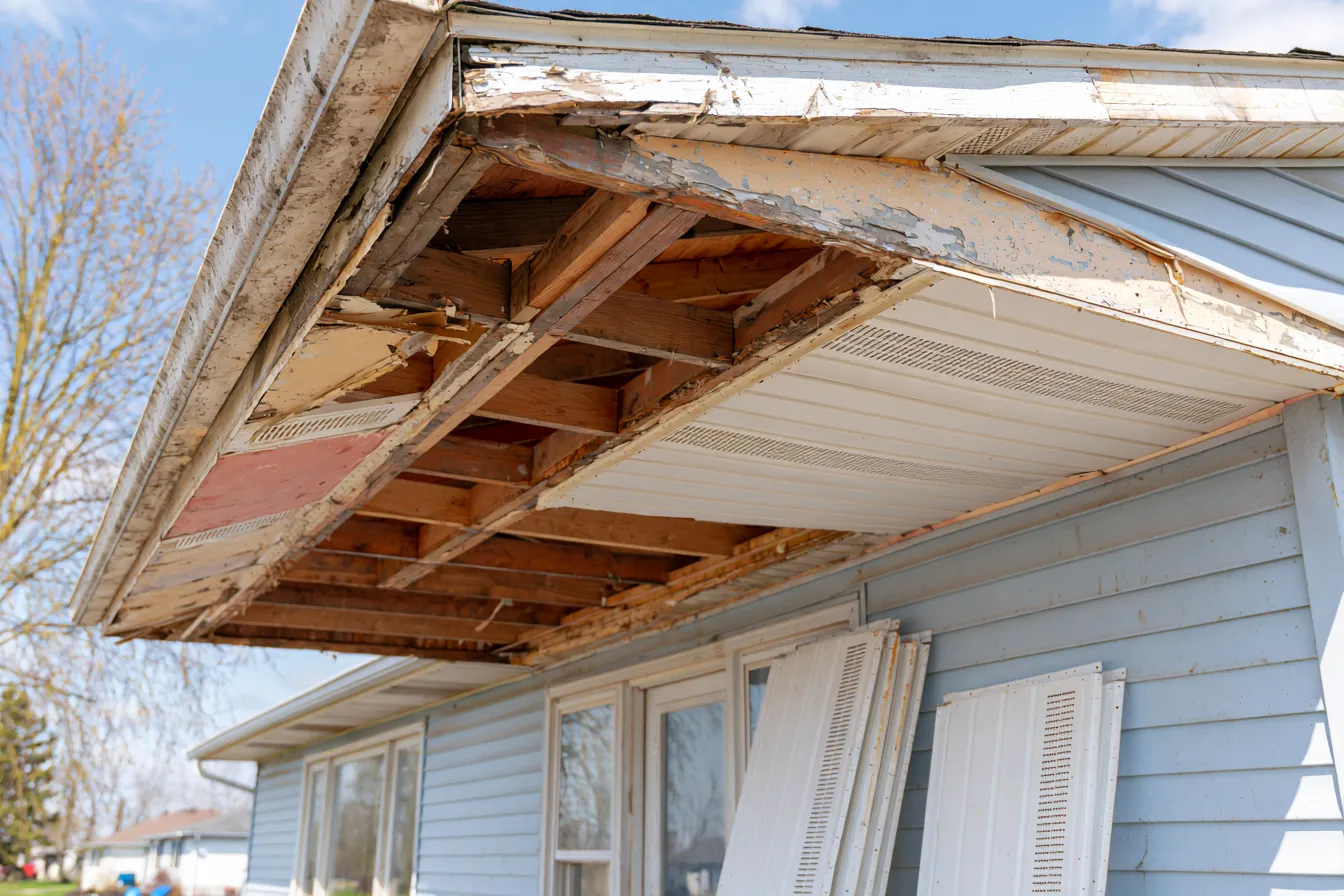
What chimney flashing repair covers
Chimney work is metal work. A repair covers the two-part system that wraps the brick, along with any decking the old metal let go soft.
- 01Step flashing at the courses
- Bent metal lapped in with every shingle course. It nails to the deck, not the brick.
- 02Counter flashing at the brick
- The upper piece, cut into the mortar over the step metal. It keeps water from running in behind the flashing.
- 03The deck under the joint
- Water getting in has been landing on wood. Any soft sheathing comes out before new metal goes down.
- 04Shingle courses put back
- New step metal means lifting the courses beside the chimney. They go back in the same weave.
- 05Sealant, last
- It goes on at the end, over metal that already sheds water. Used alone, it hides the joint for a season.
If you're seeing water somewhere besides the chimney, a roof inspection covers more ground than a flashing call.
The order a chimney flashing repair goes in
Flashing runs in order, because every piece laps the one under it. Skipping to the top piece is how a chimney gets sealed twice and still leaks.
Open the joint
The courses beside the chimney come up first, because step flashing is woven in under them. Metal that has rusted through or pulled loose comes out with them.
Check the deck
Wood that's been taking water goes soft, and new metal over soft wood buys nothing. Any bad sheathing comes out before the flashing is set.
Set the metal
Step pieces go back in with the courses, in the same order they came out. The counter flashing sets over them so the joint can move without opening.
Signs the flashing has failed around a Melissa chimney
These are the ones that point at the joint instead of the field. Storm damage usually shows up across the whole roof at once, and a failed chimney flashing shows up in one place, over and over.
- A rust line down the brick: old steel flashing rusts at its top edge and washes color down the face.
- Stains beside the fireplace: water is coming in at the chimney and following the chase down instead of dropping through the ceiling.
- Daylight at the shoulder: if you can see light from the attic side, the metal isn't lapping where it should.
- Metal that lifts by hand: a piece that moves has lost the nailing that held it flat.
- Cracked caulk along the top edge: somebody sealed this joint before, and it is open again.
- A damp smell after rain: the chase holds water long after the roof surface has dried.
Sometimes the metal is sound and the water is coming in through the crown or the mortar. If that's what our roofers find, that's what they tell you.
Why flashing repairs are priced by what the tear-back finds
You came here wanting a number. What sets it sits under the old metal: how far the water traveled along the deck, whether the sheathing at the joint is still solid, whether the counter flashing was cut into the mortar or just stuck to the face of the brick.
Our roofers can read the top half of that from a ladder. The rest shows up when the old flashing comes off, and that is where the cost of the work settles. Whatever it comes to, the figure they leave with you holds while you think it over.
See cost ranges for Melissa roofs- How far the water got before it showed
- Whether the decking under the joint went soft
- Brick chimney or a framed chase with siding
- How the old counter flashing was fixed in
- Chimney size and how many courses come up
- Pitch, and how reachable the chimney is
Why chimney corners fail first in North Texas weather
Wind works on edges. An open run of shingles gives it nothing to grab, but a chimney is a hard stop in the middle of the slope, and its base is metal lapped over metal rather than sealed down. Collin County's record tops out at an 81 mph gust, and pressure like that finds that joint long before it touches the field.
- 01Newer roofs, sealed field
- Most roofs here are still on their first covering, and a sealed field takes a gust well. The chimney joint only laps, so it is the part that opens first.
- 02Metal that has to move
- Brick and metal expand at different rates through a North Texas summer. Counter flashing set into the mortar is built to let that happen without pulling the joint apart.
- 03Debris in the uphill corner
- The high side catches whatever the wind carries, and a wet pack of leaves sits against the metal instead of draining past. Metal that stays wet gives up years before metal that dries.
The record is county-wide. It says what the weather here does, and it can't say what landed on your address.
Have the flashing checked before the ceiling stains
The streak on the brick shows up long before the ceiling does. Describe what the chimney corner is doing, and our roofers start at the joint.