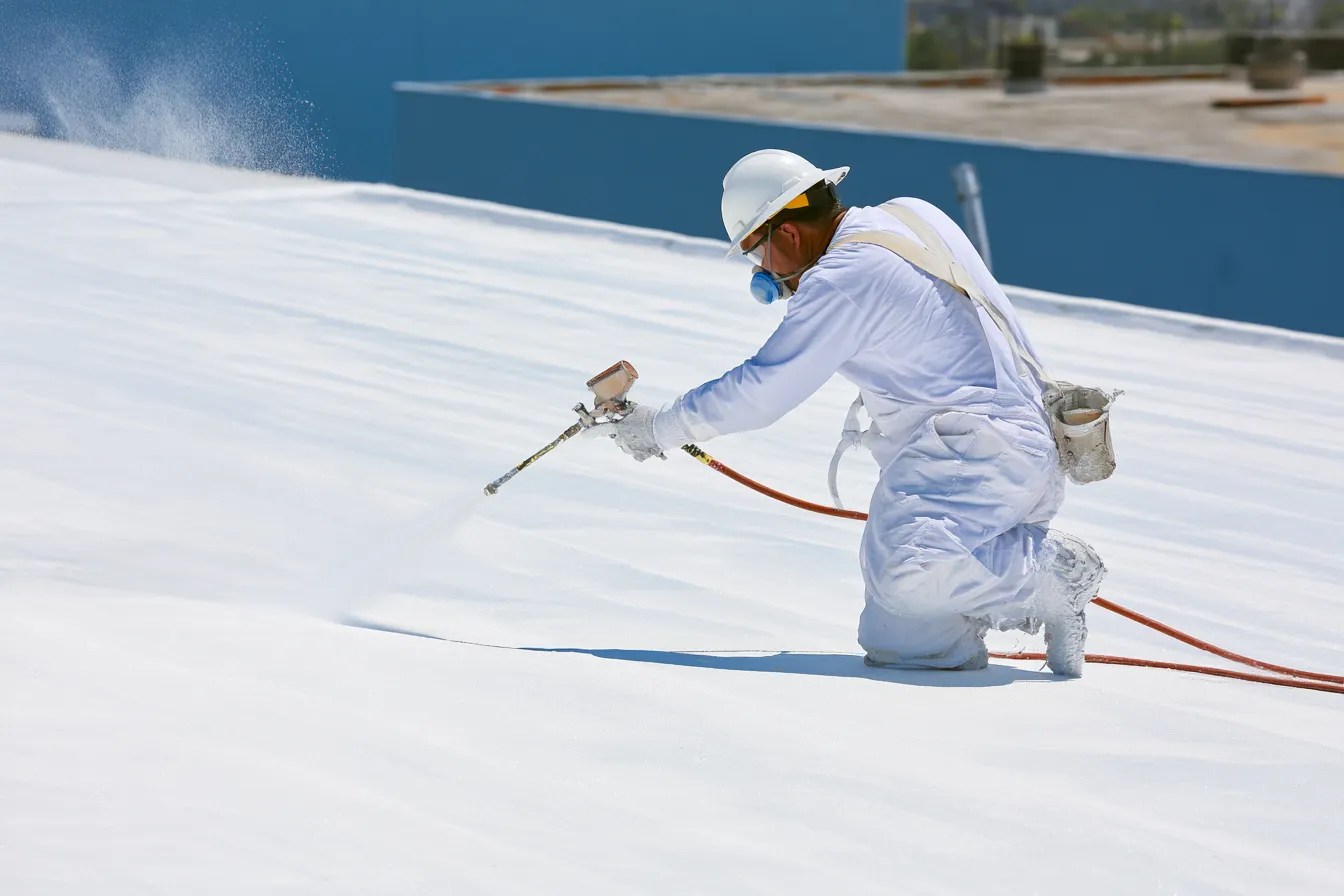
Commercial Roofing in Melissa, TX
Flat and low-slope roofs give out at the seams, the drains, and the pipes coming up through them. Melissa Roofing Co takes what you send about the building, and our roofers read it.
When a patch holds and when it does not
A targeted repair on a commercial building stays on the section that failed, and the rest of the roof keeps doing its job. A replacement takes the whole surface down to the deck, and you hear which one your building needs before anyone asks you to decide.
The stain over a back storeroom in August usually started at a seam or a curb months earlier, and by then the insulation under it is wet. Melissa Roofing Co knows the low-slope buildings around here, and our roofers can tell which failures a patch will hold and which ones it will not.
Which system belongs on your building?
There is no best commercial roof, only the one that fits the building. How it drains, what sits on it, and who walks it decide more than the brand name does.
TPO
A heat-welded white sheet that reflects sun and keeps rooftop heat out of the building.
EPDM
A rubber sheet with a long track record, joined at seams that are the first thing to watch as it ages.
PVC
A welded sheet that resists grease and oils, which is why kitchens and exhaust-heavy roofs get it.
Modified bitumen
Reinforced asphalt in rolls, tough underfoot and a common pick on smaller low-slope roofs.
Built-up roofing
The classic tar and gravel build, still doing its job on plenty of older buildings.
Coatings
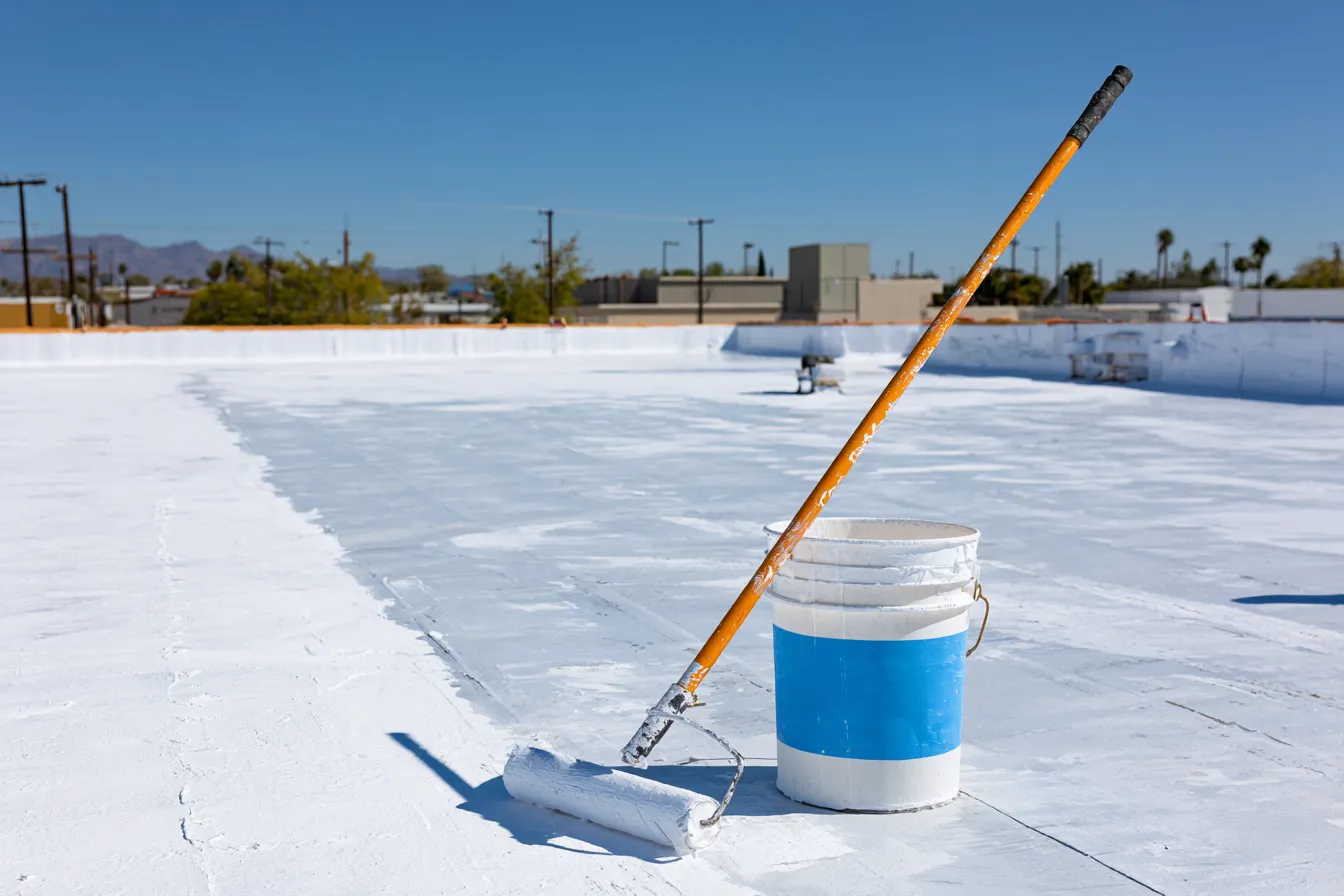
A fluid-applied layer that renews a sound, dry roof instead of replacing it.
Not every commercial building is flat. Where the slope is steeper, a standing seam metal roof fits better than a membrane, and both are worth pricing before you commit. Whichever system goes on, our roofers carry their own workmanship warranty and put its terms on the estimate before you sign.
Flat and low-slope work on Melissa buildings
Low-slope work is mostly the parts a walk-through never reaches, from the seams and the flashings at curbs and parapets to what the drains do when it rains. Each one is a separate line on the estimate, so you can see which part of the roof the work is on.
- 01Seams and laps
- A roofer walks every joint where two sheets meet. Most flat-roof leaks start at one of them.
- 02Flashings and curbs
- Walls, parapets, and every HVAC curb carry their own flashing. Each one is a seal that has to hold.
- 03Penetrations
- Every pipe and vent through the membrane is a hole somebody sealed. More rooftop equipment means more of them to watch.
- 04Drains and scuppers
- Water that cannot leave is the first enemy of a flat roof. Clear drains and enough slope are what keep it moving.
- 05Insulation and deck
- What sits under the membrane decides repair or replacement. Wet insulation does not dry out under a coating.
- 06The membrane itself
- Punctures, blisters, and years of sun show up out in the field. That part usually gives out last.
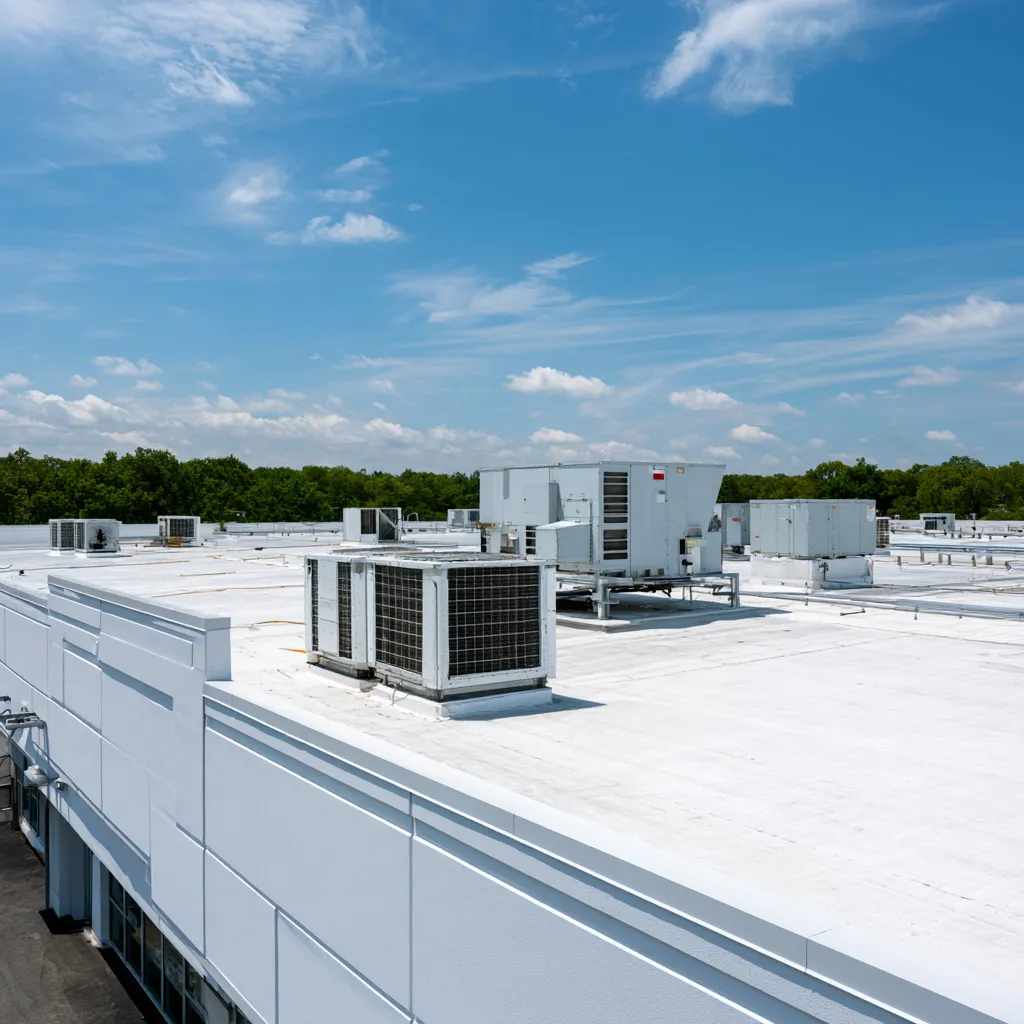
Hail on a low-slope roof does not look like hail on shingles, and Collin County gets its share of hail. Our roofers know what a bruised membrane looks like up close.
What our roofers do on a low-slope roof
A low-slope survey takes longer than a shingle roof, because the failures are small and the roof is big. It runs at its own pace, and no number goes on it until it is finished, whether the answer turns out to be a patch or a full roof replacement. How Melissa Roofing Co works on a building is no different from how it works on a house: a roofer walks it, and the decision stays yours.
The walk
Our roofers go seam by seam, curb by curb, drain by drain. Low-slope failures are small and easy to step over.
The wet check
Where the deck feels soft or the membrane bubbles, a local roofer tests the insulation underneath for trapped water. That answer is what separates a patch from a tear-off.
The write-up
The write-up names the system, the fastening, and the area, and it says which failures need work now and which ones can wait a season. Whether to patch or replace stays on your own schedule from there, however long an owner or a board takes.
What Melissa building owners ask first
Q1Can a flat roof be repaired, or does it all come off?
Q2Does hail damage a commercial roof the same way?
Q3How do warranties work on a commercial roof?
Send the building address and the roof type
Send the address, the roof type, and what you are seeing inside. Melissa Roofing Co's roofers start from those three facts.